

Hairstyling for thinning edges: when locs help, and when they can hurt
By Beautiful Dollhouse Salon - Locs & Hairstylist, Ponytails | July 11, 2026
A lot of people come in saying the same thing: they left their retwist feeling great, like “I’m feeling great with my retwist, ” and then they ask the real question, “Can locs actually help my thinning edges?” In many cases, yes. Locs can be a protective, low-manipulation option for thinning edges when we start and maintain them gently. But locs can also make edge breakage worse if they’re started too tight or loaded with heavy extensions. Here in Atlanta, that honest difference matters.
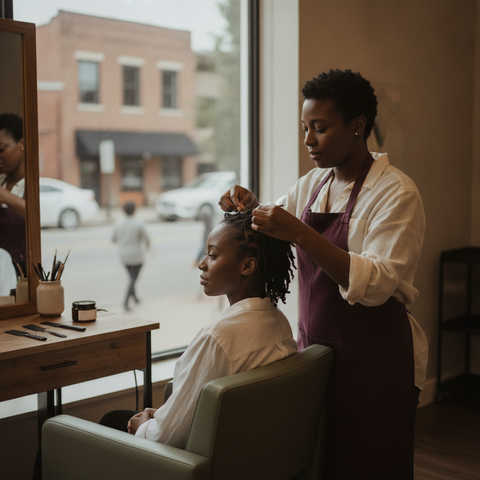
If your edges are thinning, you don’t need a pep talk. You need a plan that respects how fragile that hairline can be. We’re in Castleberry Hill, and we see time-pressed professionals and event-goers every week who want something that holds up through sweat, humidity, and long commutes, without pulling their hairline tighter and tighter.
Thinning edges usually come from tension, not “bad hair”
Edges tend to thin when they’ve been asked to do too much for too long. That can look like tight parts, tight ponytails, frequent slick-backs, and styles that keep the same area under stress week after week. Add in heavy hair or extensions, and the hairline is basically carrying the whole style.
And it’s not always the style itself. It’s the habits around it. Constant redoing, constant brushing, constant gel, constant heat. The front of your head gets handled the most, so it’s usually the first place you notice change.
Quick truth: if you’re already protecting your edges but they keep thinning, the next step is not “tighter for longevity.” It’s less tension and fewer touch-ups.
Why locs can help thinning edges when we keep the tension low
Locs can take you out of the cycle of daily manipulation. That’s the big win for edges. When your hair is locked and maintained properly, you’re usually doing less combing, less brushing, and fewer tight re-styles that pull the hairline.
We also pay attention to what your edges can actually tolerate. Starter methods matter. For fragile hairlines, low-tension starters like finger coils, small two-strand twists, or interlocking done by a pro can be safer than forcing a look that’s too tight on day one. We’ll talk through your density around the perimeter, your parting goals, and how you normally wear your hair day-to-day.
Maintenance matters just as much as the start. A retwist that’s too tight, too frequent, or paired with constant tight updos can cancel out all the protective benefits. When we keep your locs neat and clean, we’re aiming for a polished finish without that “my scalp feels sore” feeling.
“Honey, my hair stylist, took very great care of my locs.”
One of our regulars
When locs can hurt edges
Locs can work against you when the foundation is too tight, the parts are too small for your hair’s strength, or the locs are weighed down with heavy extensions. If you’re already noticing breakage at the hairline, we keep the goal simple: reduce tension first, then build a style plan you can keep up with.
Starter locs vs interlocking in Castleberry Hill: what we look at first
If your edges are thin, we don’t jump straight into a one-size plan. We start with how your hair behaves around the perimeter and what you need your style to do. Some people need a clean, professional look that holds up in Atlanta humidity. Some need an event-ready style that still feels light on the hairline.
Starter twists or coils
Often a good fit if your hairline needs gentleness and you want a softer start. We focus on clean parts and a tension level that still lets you sleep comfortably.
Interlocking (done by a pro)
Can be helpful if you need a longer-lasting root hold without over-twisting. We’re careful with tension and tool work, especially around the edges.
If you want more style ideas once your base is healthy, we also put together a lot of practical looks in our locs styling guide for Atlanta.
Washing locs in Atlanta humidity without weighing them down
Atlanta summers are humid, and your scalp knows it. The goal is a clean scalp and light locs, not product build-up that turns into itch and residue. We’ll point you toward lightweight rinses and targeted scalp cleanses that keep things breathable.
- Keep it light at the roots: too much heavy product around the hairline can lead to more touching and scratching, which isn’t what thinning edges need.
- Dry thoroughly: moisture trapped too long can make your scalp feel off. Good airflow matters, especially after workouts or long commutes.
- Don’t over-retwist: neat roots are nice, but your edges usually do better when you give them time between tension.
Who loc maintenance is best for, and when we’ll suggest another option
Loc maintenance is a great fit if you want a neat, clean look with less day-to-day handling. We maintain and style locs for a polished finish, and our loc services start at $100. A lot of people come to us after a stretch between retwists, and they love leaving feeling put back together.
It can also be a really good match if your schedule is packed and you need a style that holds up. We’re in Castleberry Hill with easy MARTA access, and we keep evening availability for people who need after-work consults or event-ready styling.
If your edges are extremely fragile or you’re seeing shedding that feels sudden, we may steer you toward a temporary protective option first and, when needed, a trichologist for a deeper look. That’s not us turning you away. That’s us protecting your hairline.
Why Atlanta clients trust our team with their locs, even when hair feels “mess”
People stick with us because we listen, we move with purpose, and we pay attention to details. We hear it all the time: the atmosphere feels welcoming and relaxing, our team keeps it professional, and you don’t feel rushed. That matters when you’re already feeling self-conscious about your hairline.
“They were super respectful of my time and really listened to what I wanted for my hair.”
A recent visitor
We also serve Atlanta, Decatur, East Point, College Park, Hapeville, and Smyrna for consultations and loc maintenance. If you’re coming in from outside Castleberry Hill, tell us what your schedule looks like so we can match you with the right stylist and timing.
Ready for a real answer about your edges? Come in for a consult and let’s look at your hairline, your tension habits, and the safest way to start or maintain your locs.
You can also visit our services page or browse our gallery to get a feel for our work.
Address: 346 Peters St SW #3, Atlanta, Georgia 30313
Call: +14048068136 | Email: thebeautifuldollhouse@gmail.com